Sri Mahaganapathi and Sree Balasubrahmanya
A brief introduction about Sri Mahaganapathi...
ഓം വിഘ്നേശ്വരായ നമ:ഓം ഏകദെന്തായ നമഃ:
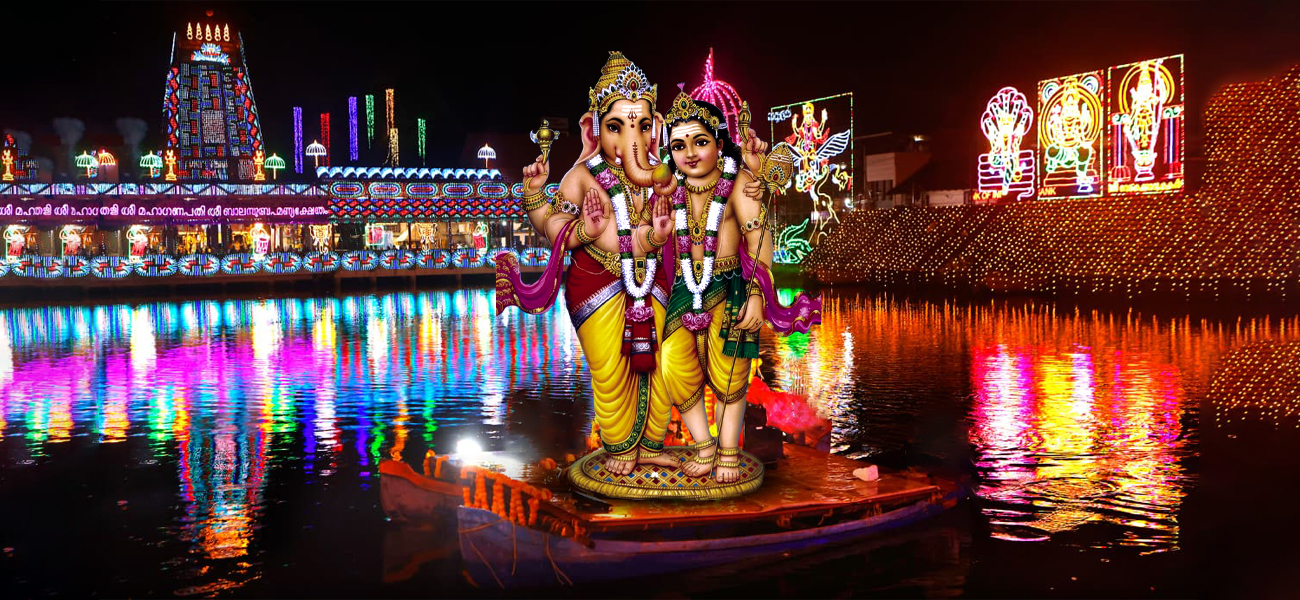
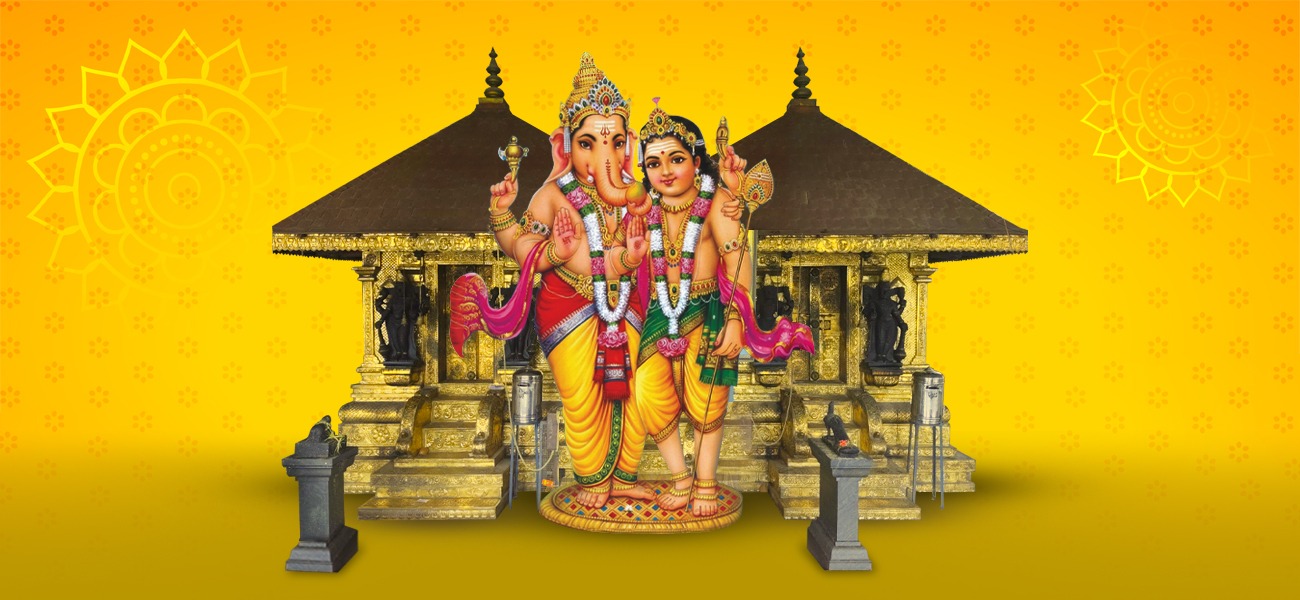
തളി ശ്രീ മഹാഗണപതി ശ്രീ ബാലസുബ്രഹ്മണ്യ ക്ഷേത്രം, തളി, കോഴിക്കോട്:
A brief introduction about Sri Mahaganapathi...
ഓം വിഘ്നേശ്വരായ നമ: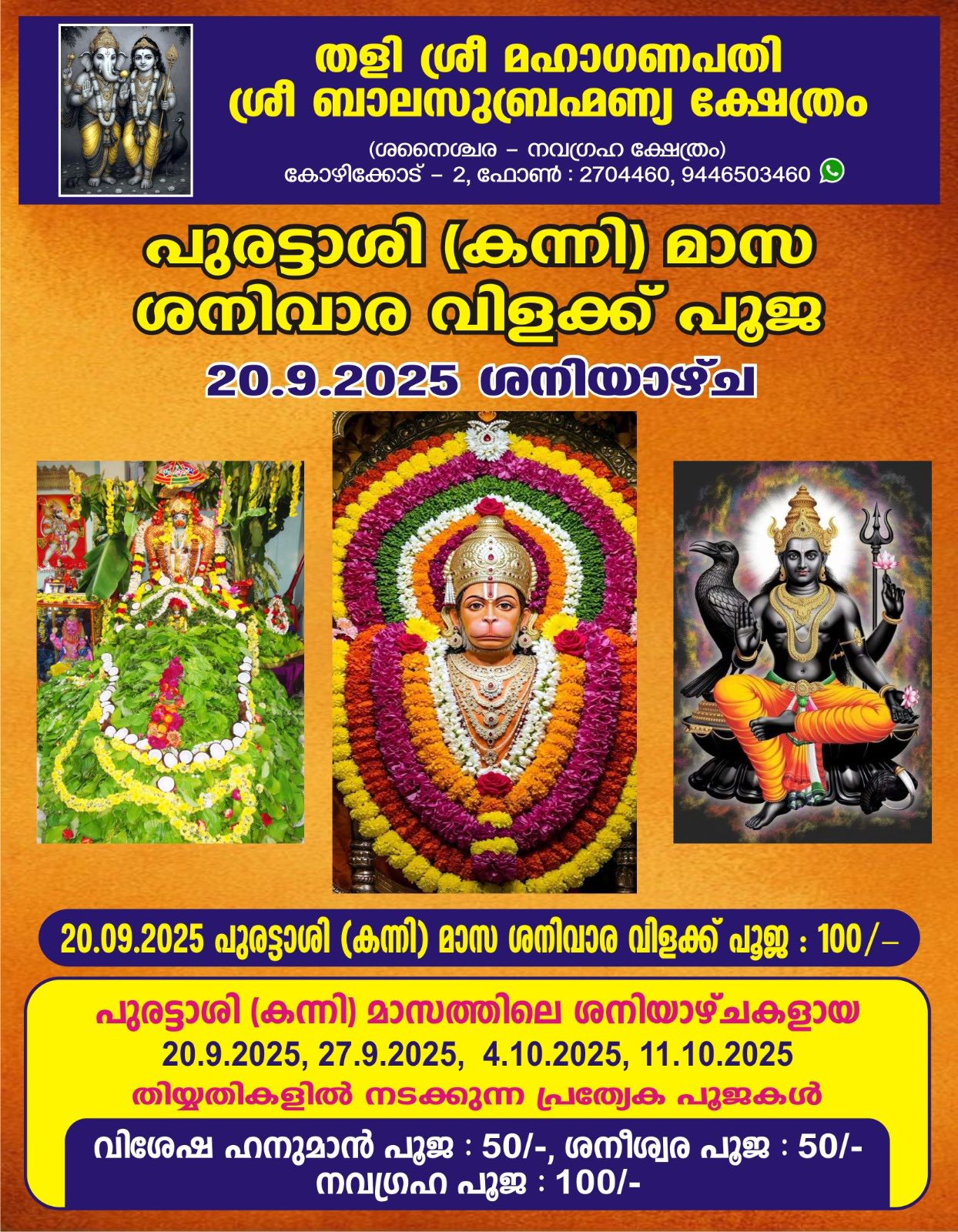
Tali Sri Mahaganapathi Sri Balasubramania Temple
(Sanaischara Navagraha Kshetram)
Kozhikode - 673002 (Click here for Malayalam)
Calicut City, also known as Kozhikode, renowned as the land of Zamorins, has a rich heritage and tradition. Numerous beautiful temples in and around Tali bear testimony to a golden era. One such legacy of a golden era is Tali Sri Mahaganapathi Sri Balasubramania temple, a 'Sanaischara Navagraha Kshetram'.
Tali Sri Mahaganapathi Sri Balasubramania Temple is managed by Tali Brahmana Samooham. The Tali Brahmana Samooham (TBS) is a community organisation formed about 2 centuries ago by the Tamil brahmin community who migrated from Tamil Nadu and settled in Calicut, the headquarters of the erstwhile Malabar District. The Samooham was formed with the objective of providing a forum for the religious and socio-cultural activities of Tamil settler brahmins of Calicut and the outlying areas.
KUMBHABHISHEKAMs
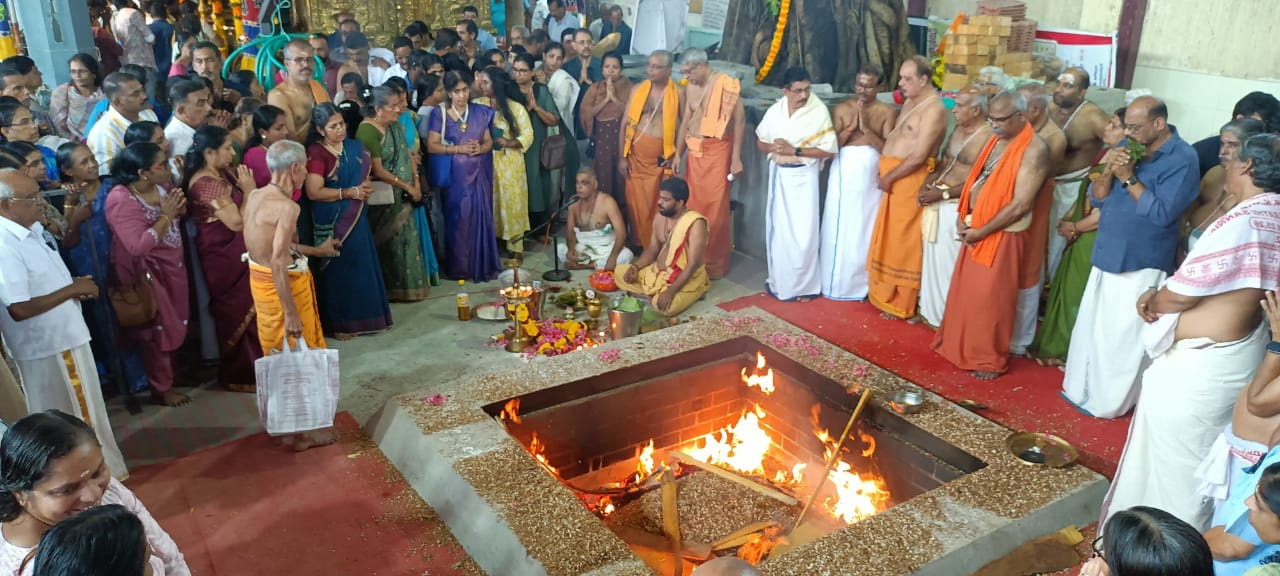
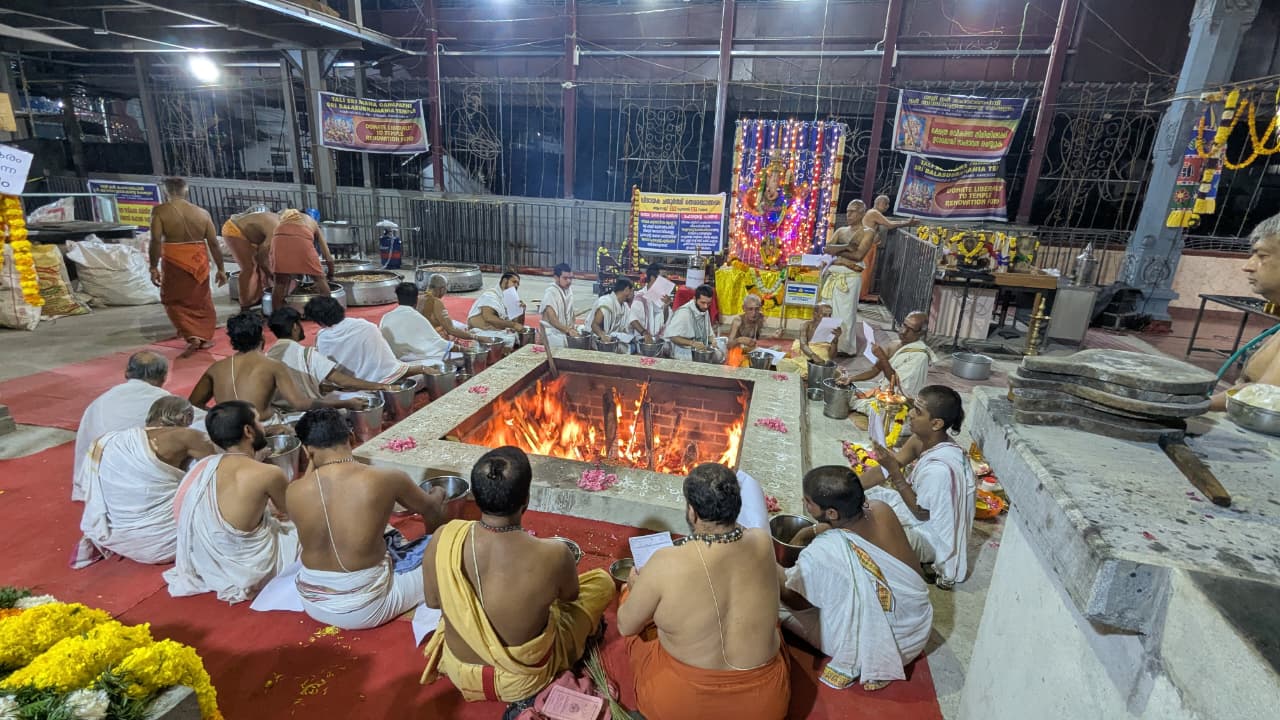
Tali Sri Mahaganapathi Sri Balasubramania temple, a ‘Sanaischara Navagraha Kshetram’, situated at heart of the historical city of Calicut also known as "Kozhikode". It is on the north western bank of the temple tank of Tali Siva temple, is a magnificent monument representing the pomp and glory of the great “Zamorin-Nediyirippu Swaroopam”. This is owned and managed by Tali Brahmana Samooham,Kozhikode, which was founded by the Paradeshi Brahmins who migrated to the present Malabar region centuries ago during the rule of the Tamil Kings.
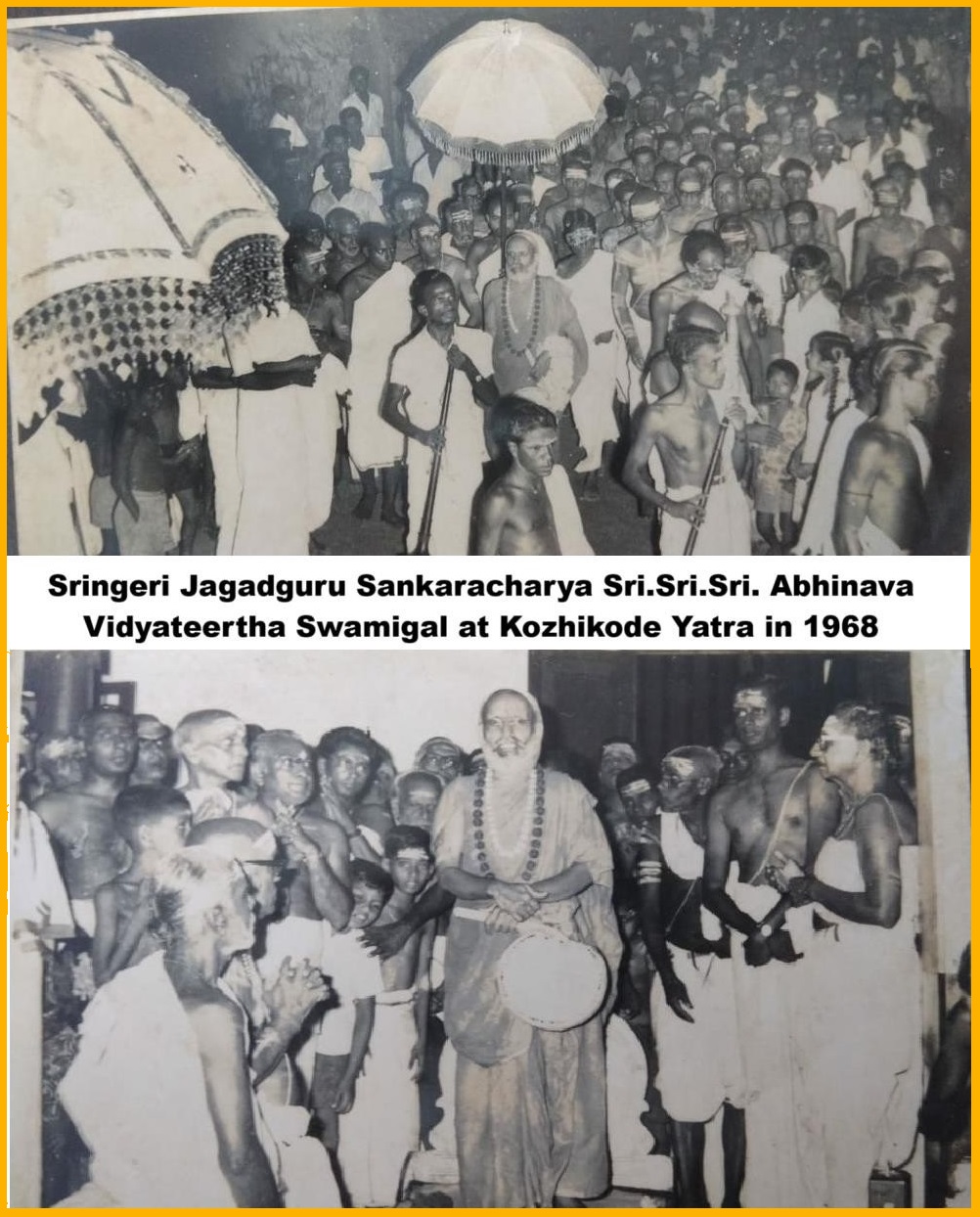
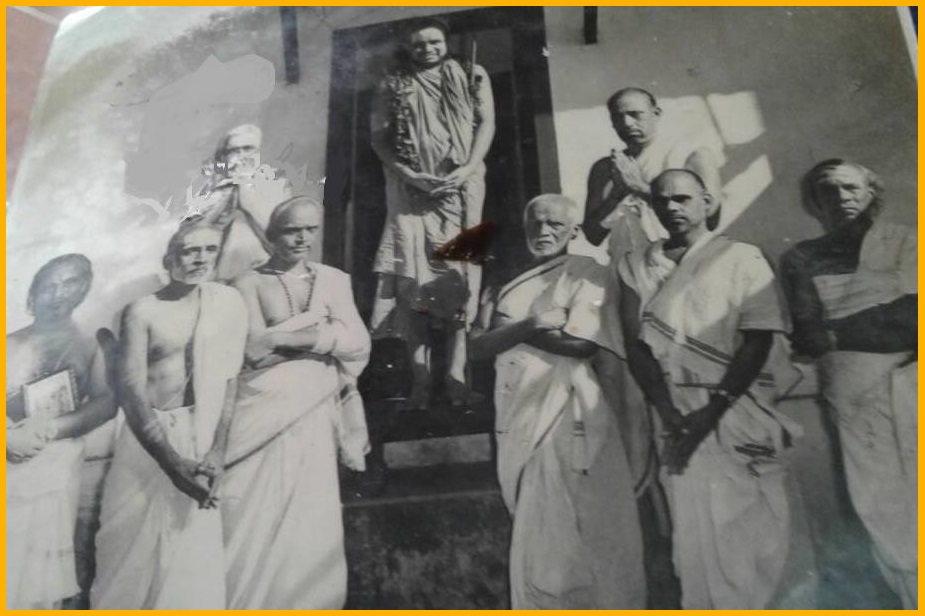
The system of worship - followed by the temple in accordance to Agama Sastras prevalent and propagated by the Dhakshinamnaya Sri Sringeri Mutt, one of the four Mutts Established by Jagadguru Sri Adi Sankaracharya. In 1968, with the kind & holy blessings of Jagadguru Sankaracharya of Sringeri mutt, Sri Sri Abhinava Vidhyatheertha Swamigal, a temple was consecrated to the shrine. Lord Mahaganapathi renowned for his benevolence graces the devotees to fulfill their wishes. There were Naga prathistas also at the base of Banyan tree at the temple premises.
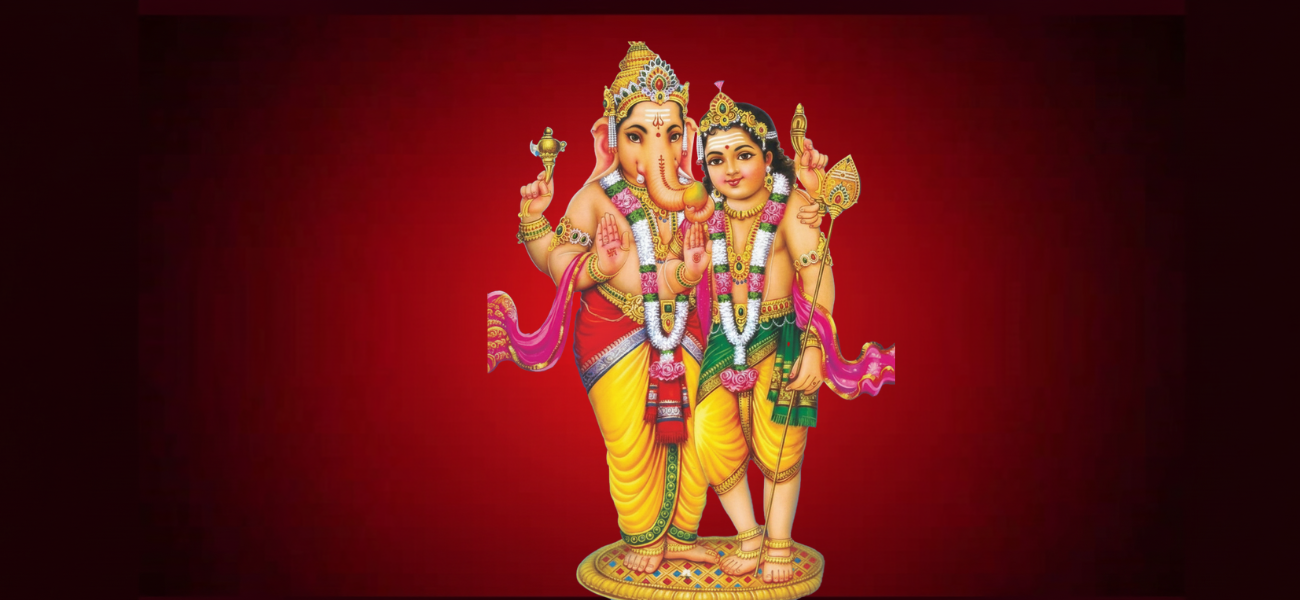
Lord Sri Mahaganapathi
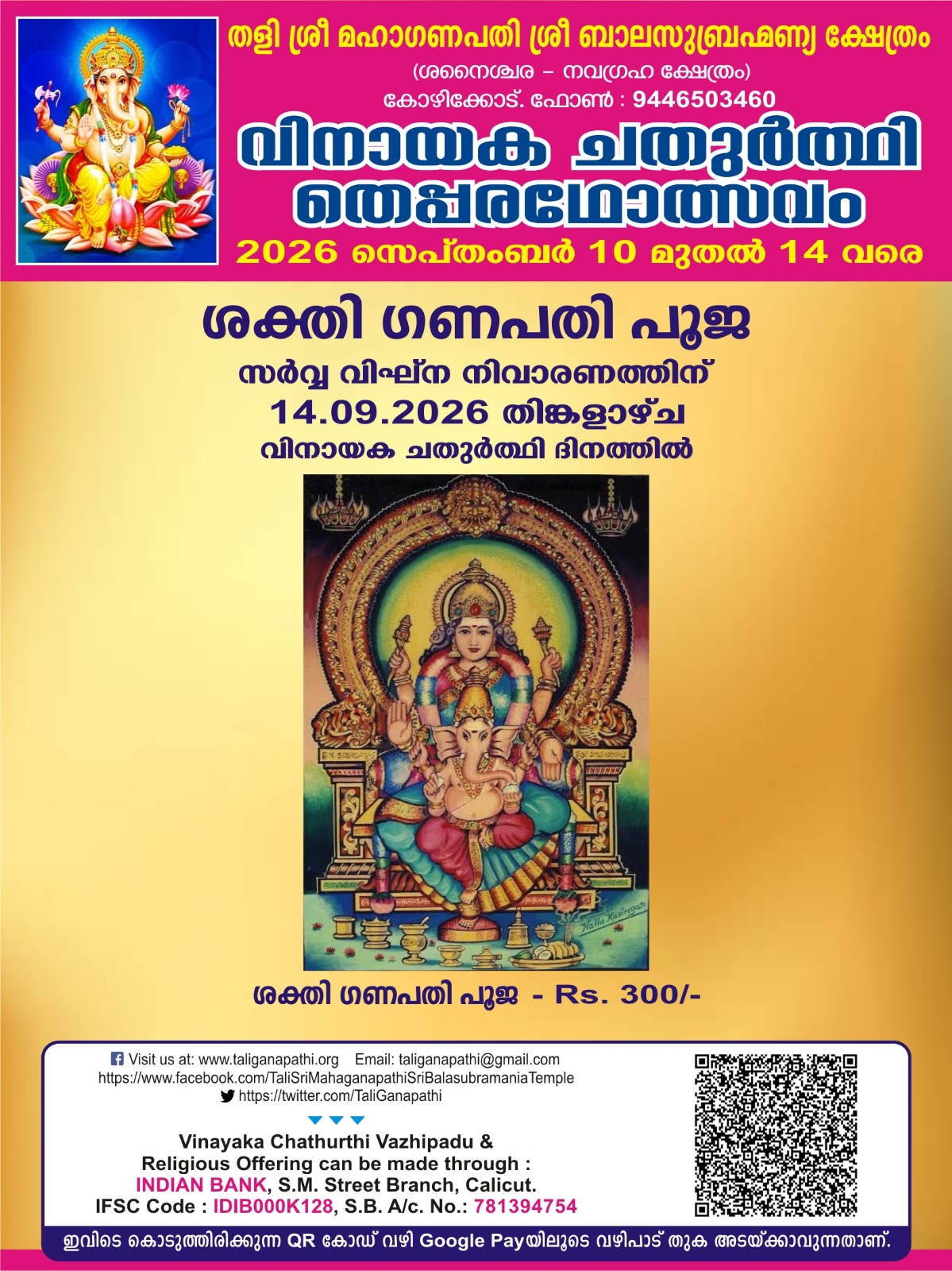
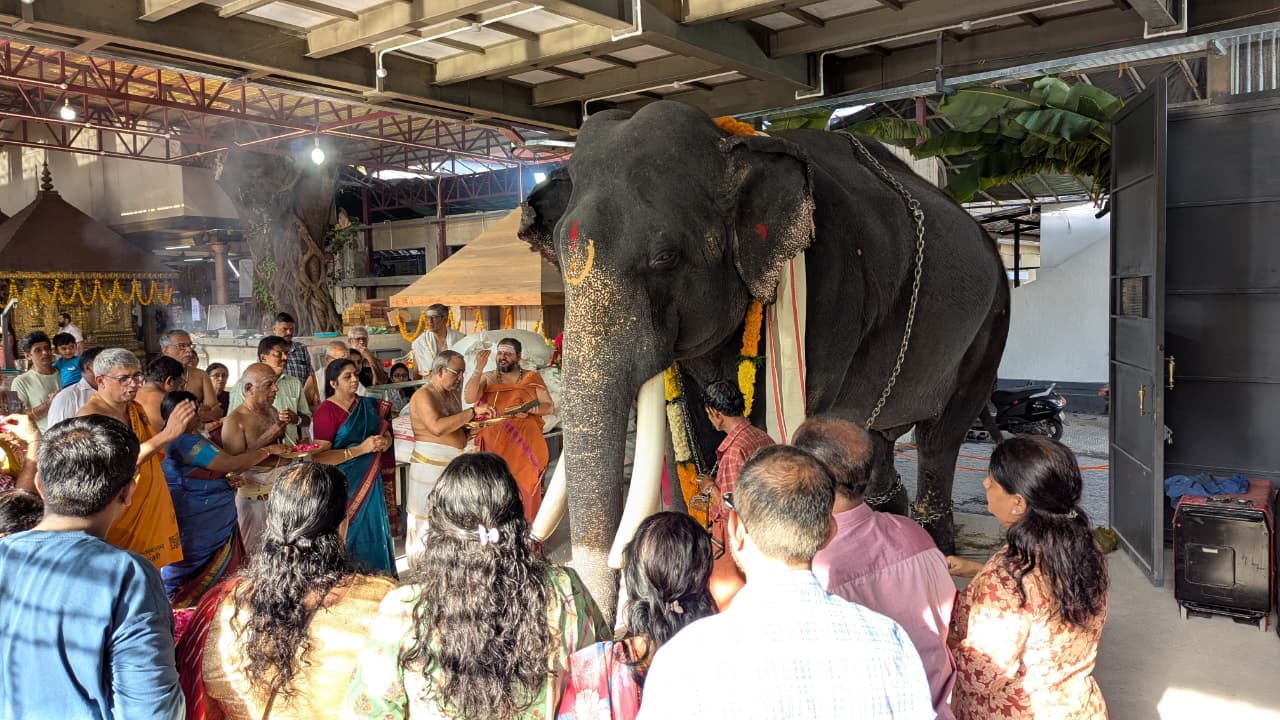
Lord Sri Mahaganapathi or Sri Ganesha is the elephant-headed God. He is worshipped first and foremost and always in any pooja or religious event . His Names are repeated first before any auspicious work is begun and before beginning any kind of worship.
He is the Lord of power and wisdom. He is the eldest son of Lord Siva, and the elder brother of Skanda or Kartikeya. He is the energy of Lord Siva, and so He is called the son of Sankara and Uma.
The origin of Lord Sri Mahaganapathi
Goddess Gauri – Parvathi , the consort of Mahadeva – Rudra - the divine mother, once felt that while her husband Lord Sri Mahadeva, the great god had countless number of sivaganas to his beck and call, she had no one exclusively for herself. To counter this feeling, the divine mother created Ganapati or Ganesha as a pure white being, out of the lepana i.e the turmeric and medicated paste applied on Her body, and placed Him at the entrance of the house. She told Him not to allow anybody inside and went for a bath. Lord Siva Himself returned home quite thirsty and was stopped by Ganesha at the gate being so instructed by his mother. Lord Siva famed for his roudra bhava, got angry and cut off Ganesha’s head, taking him for an outsider. Gauri came to know of this and grieved much. Her grief threatened the existence of the entire universe and Siva ordered His servants to bring the head of any creature that might be sleeping with its head northwards. The servants made a thorough search end found only an elephant in that position. The head of the elephant was brought before the Lord Siva joined the head of the elephant to the body of Ganapati.
Lord Siva made Lord Ganapati worthy of worship by men at the beginning of all their undertakings–marriages, journey, expedition, study, etc. He ordained that the annual worship of Ganesha, should take place on the fourth day of the bright half of Bhadrapada (August-September).
Lord Balasubramania Swami
Lord Subramania Swami or Balasubramania Swami or Lord Skanda, the second son of Siva, and the younger brother of Ganesha, is also known as Kumara, Karttikeya, Shanmukha, and many other names. His sceptre bears the cock and his vehicle the peacock which stands clutching a serpent in its talons.
His Saktis or inseparable powers are Valli and Devasena (Deivayanai) whom he assumed in the course of the great history describing his multiformed life of a series of exploits both in the celestial and temporal realms.
The advent of Skanda springs from the episode when Lord Siva burnt Manmatha or Kameswara, the God of Love with His third eye, a penalty he inflicted on Kama for disturbing him in his meditation. The purana further narrates that Six sparks which flashed forth from the third eye of Siva rushed through space, which Vayu and Agni carried and dropped into the river Ganga. Ganga, being unable to contain the divine energy, shoved it on to her banks, upon a shrub of reeds known as Shara. There is thus a combination of the ether or space, air, fire, water and earth where this Tejas or energy of Siva was held. The cumulative force which combined the forms of the five elements impregnated with the divine power of Siva (Divya-Tejas) manifested itself as a sixfold divinity with six faces (Shanmukha), including both the unmanifest and manifest elements in a single being. This is the child of Siva, of mysterious birth, mysterious up bringing, under mysterious circumstances, for a mysterious purpose which the gods alone knew. The third eye of Lord Shiva represents the principle of intelligence and Skanda, thus, as a revelation through the third eye of Siva, is said to stand for an incarnation of Divine Knowledge. He is also known as the one who imparts Prajna – or Knowledge about Knowledge.
The principal weapon of Skanda is a spear (Vel), pointed at its end and tall in stature. Devotees understand by it the need for one-pointedness of mind in slaying the demon of ignorance, which is expected to be sharp and sure in its aim. The gods, under the advice of Brahma, connived the birth of Skanda through the instrumentality of Siva and his consort Parvati. The Asuras,–Surapadma, Simhamukha and Taraka,–who wrought havoc everywhere in creation, could be destroyed only by the son of Siva manifested as a special divine Power. Skanda became the General of the celestial forces (Senani) and He is worshipped as the martial god of Hinduism.
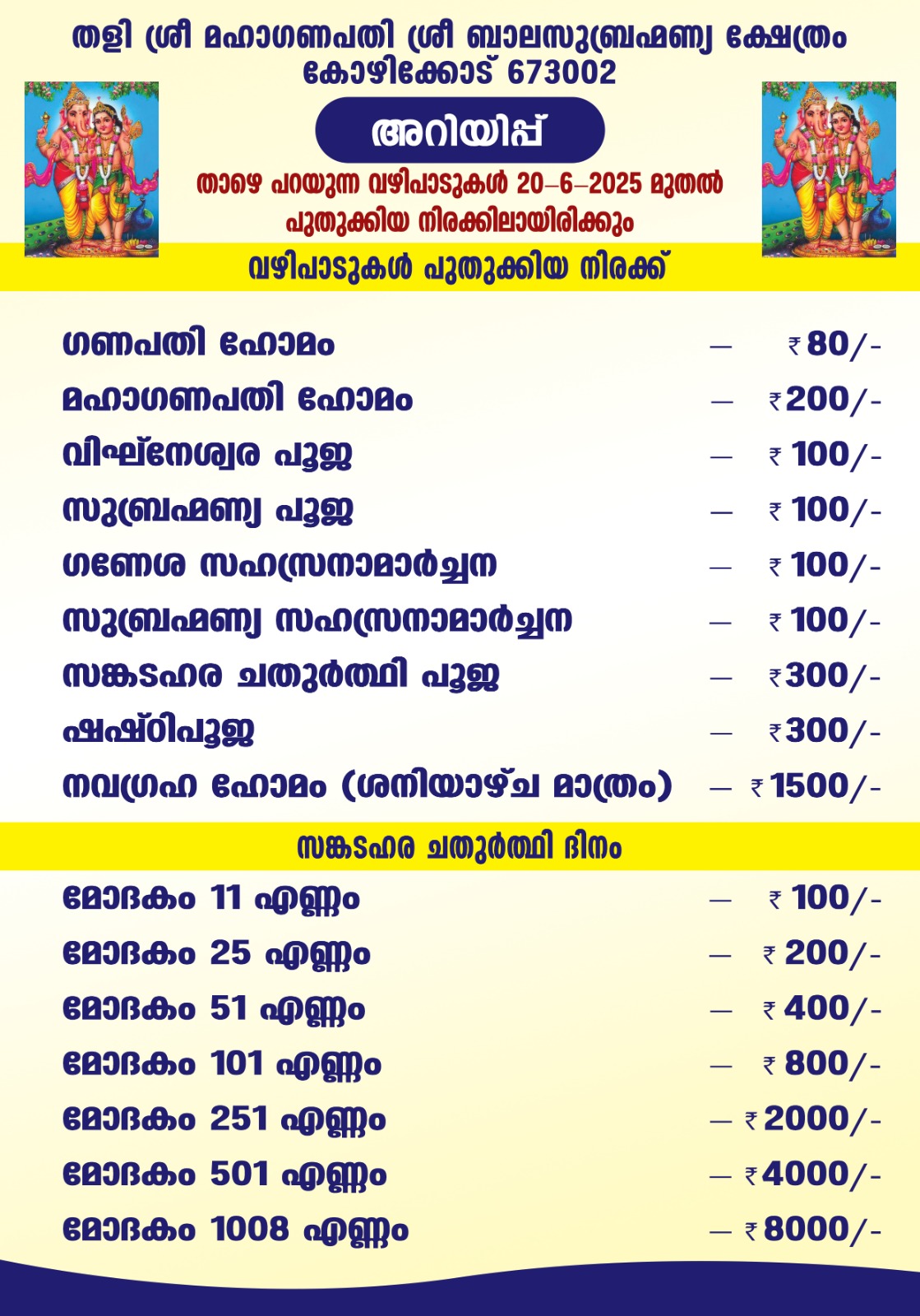
Timings and schedule for different poojas...
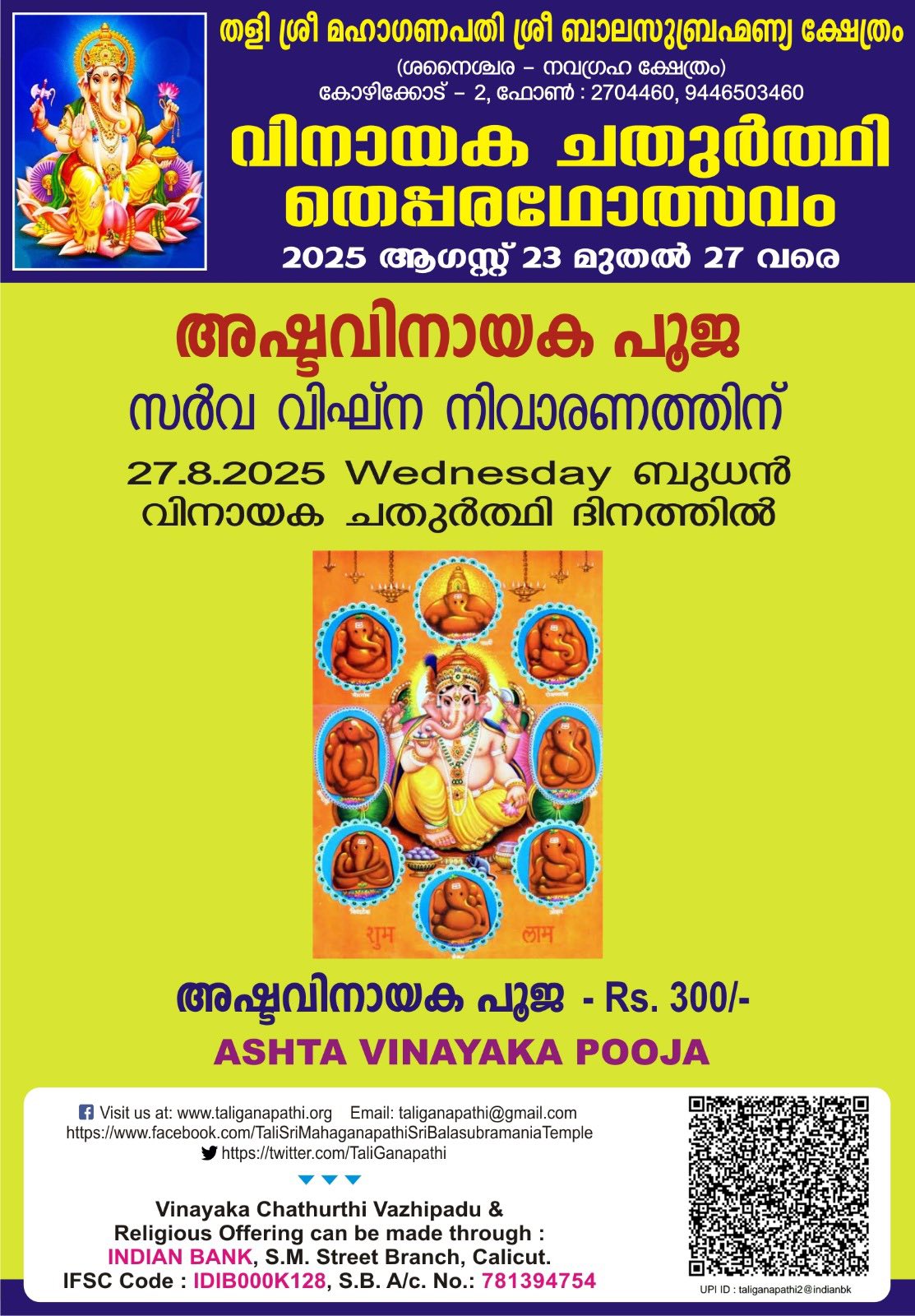
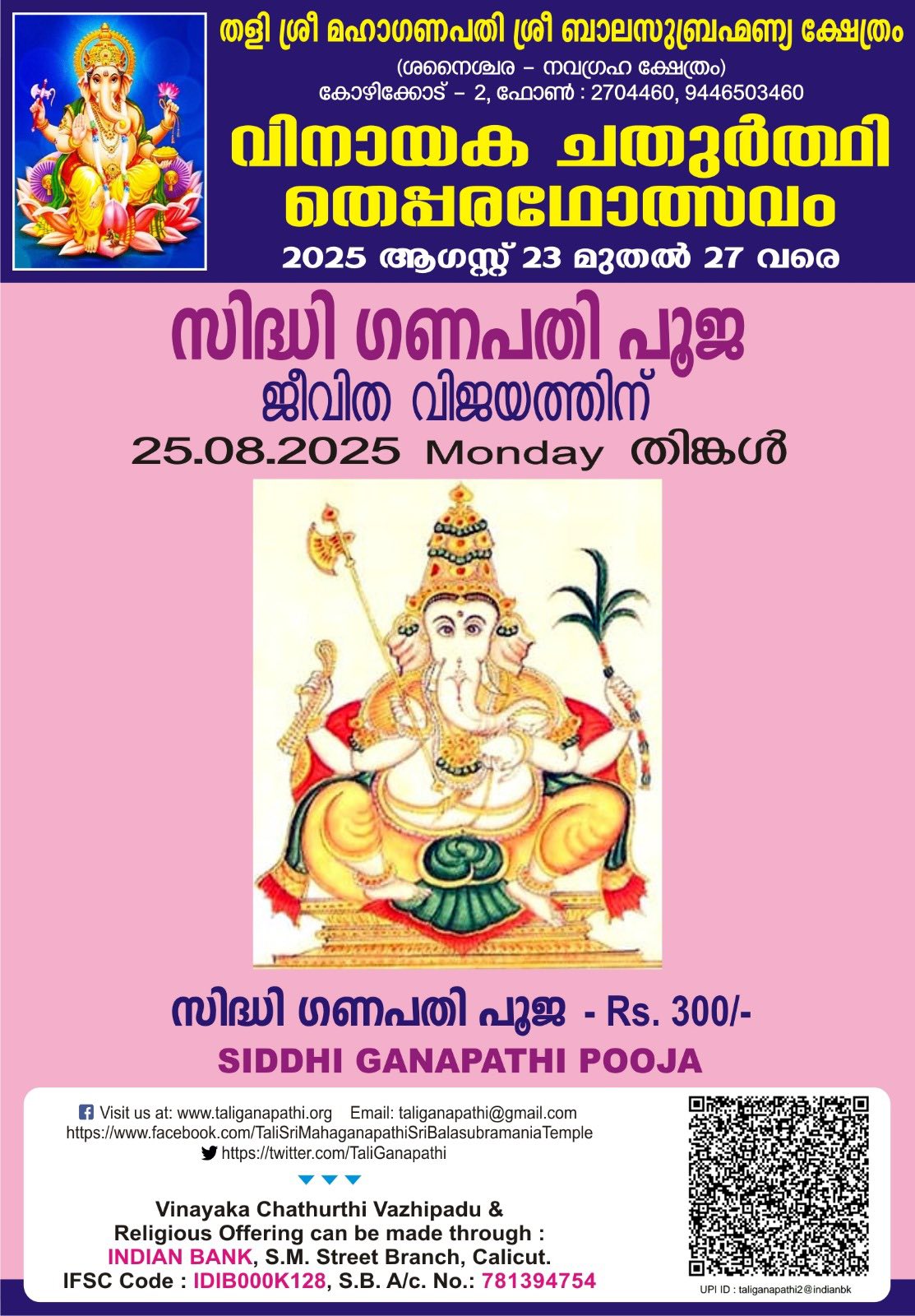
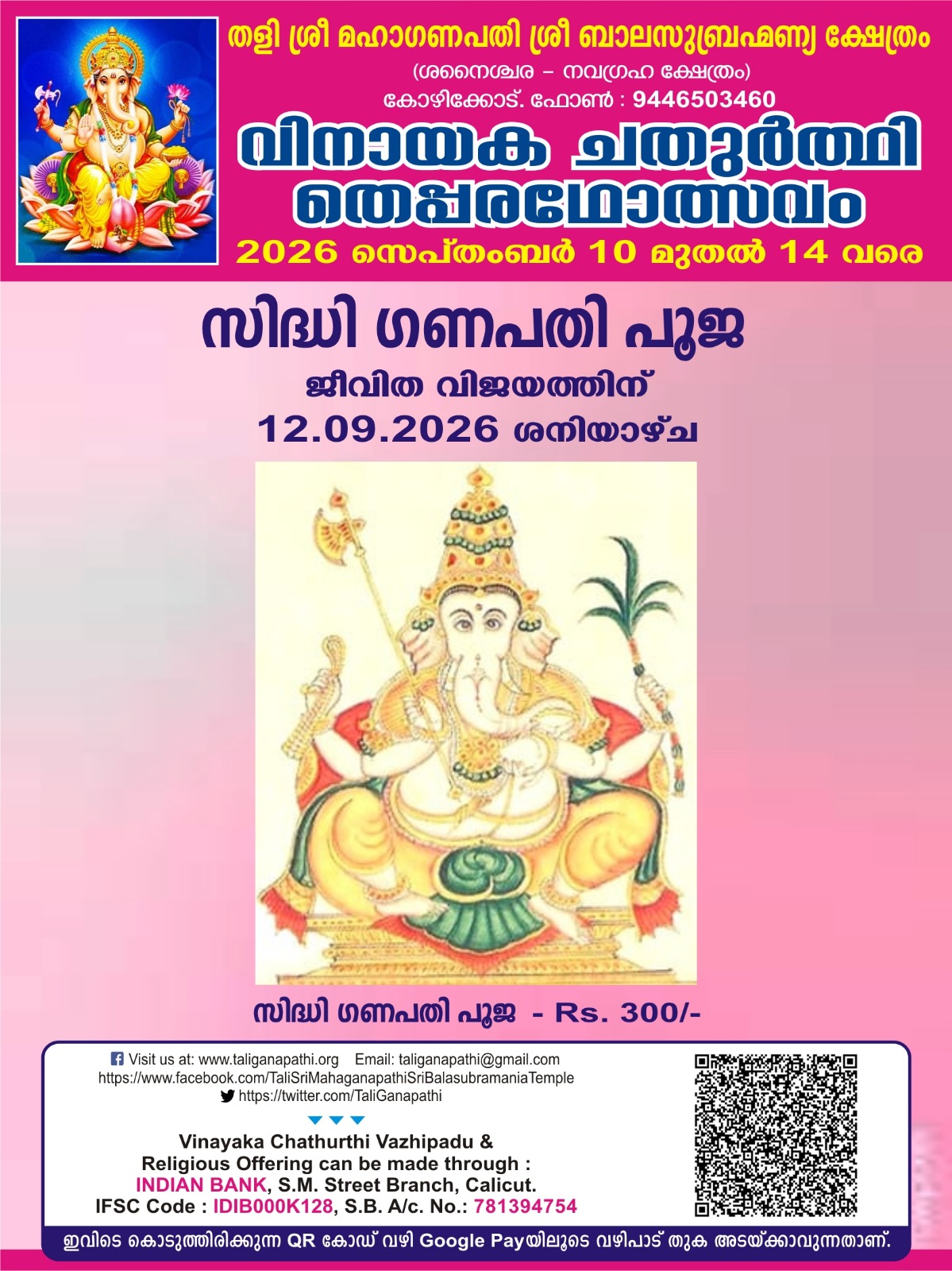
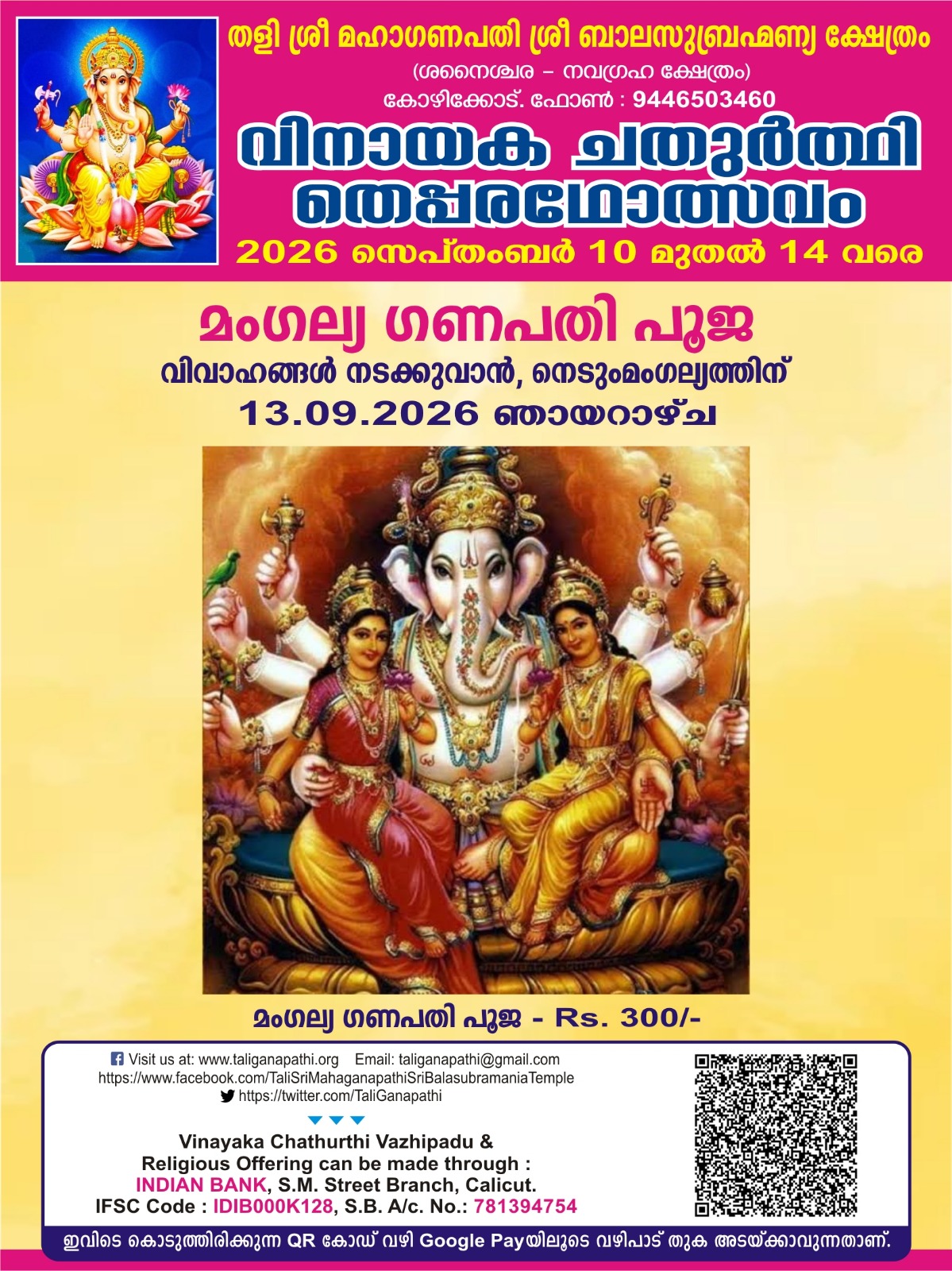
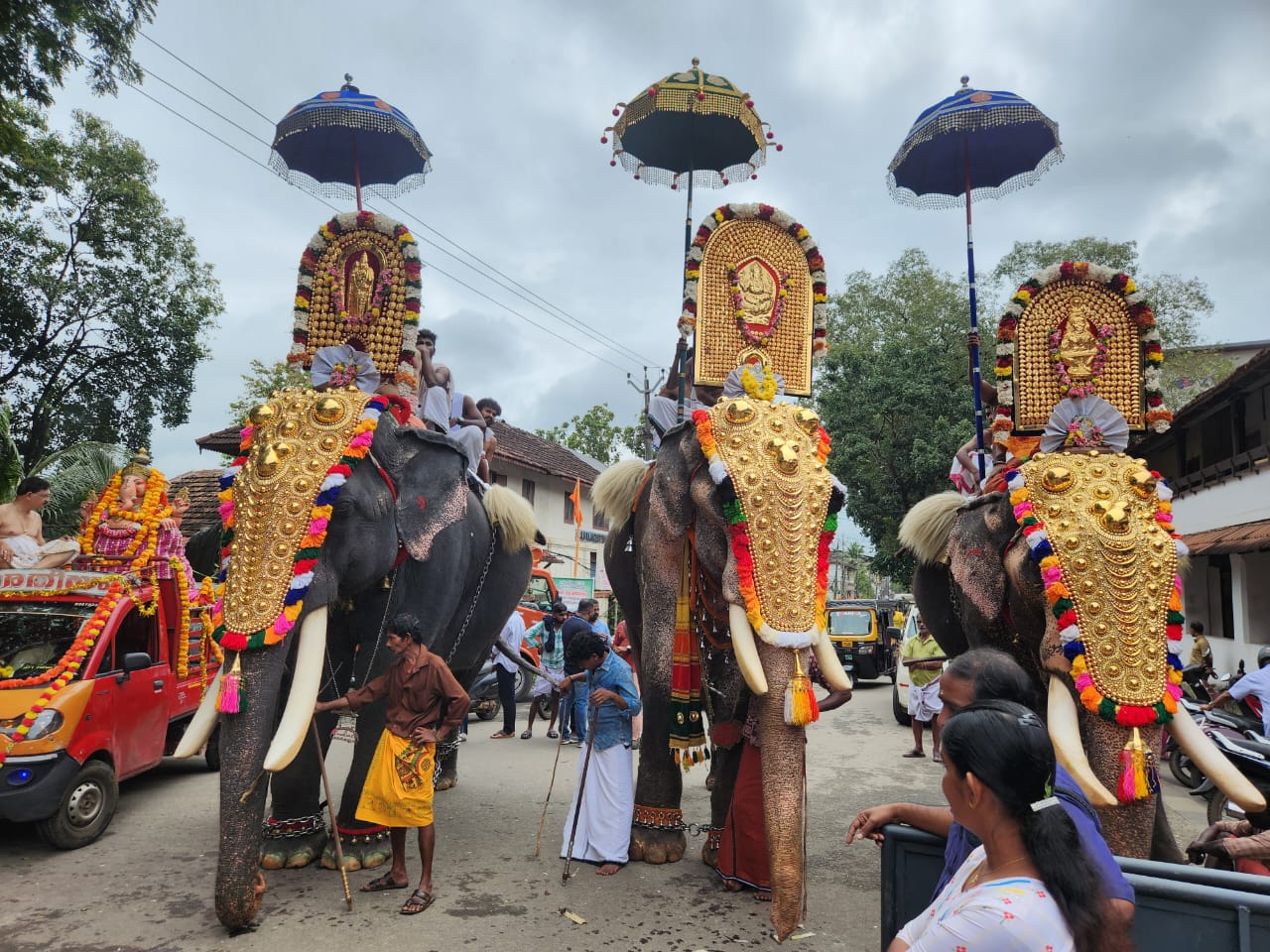
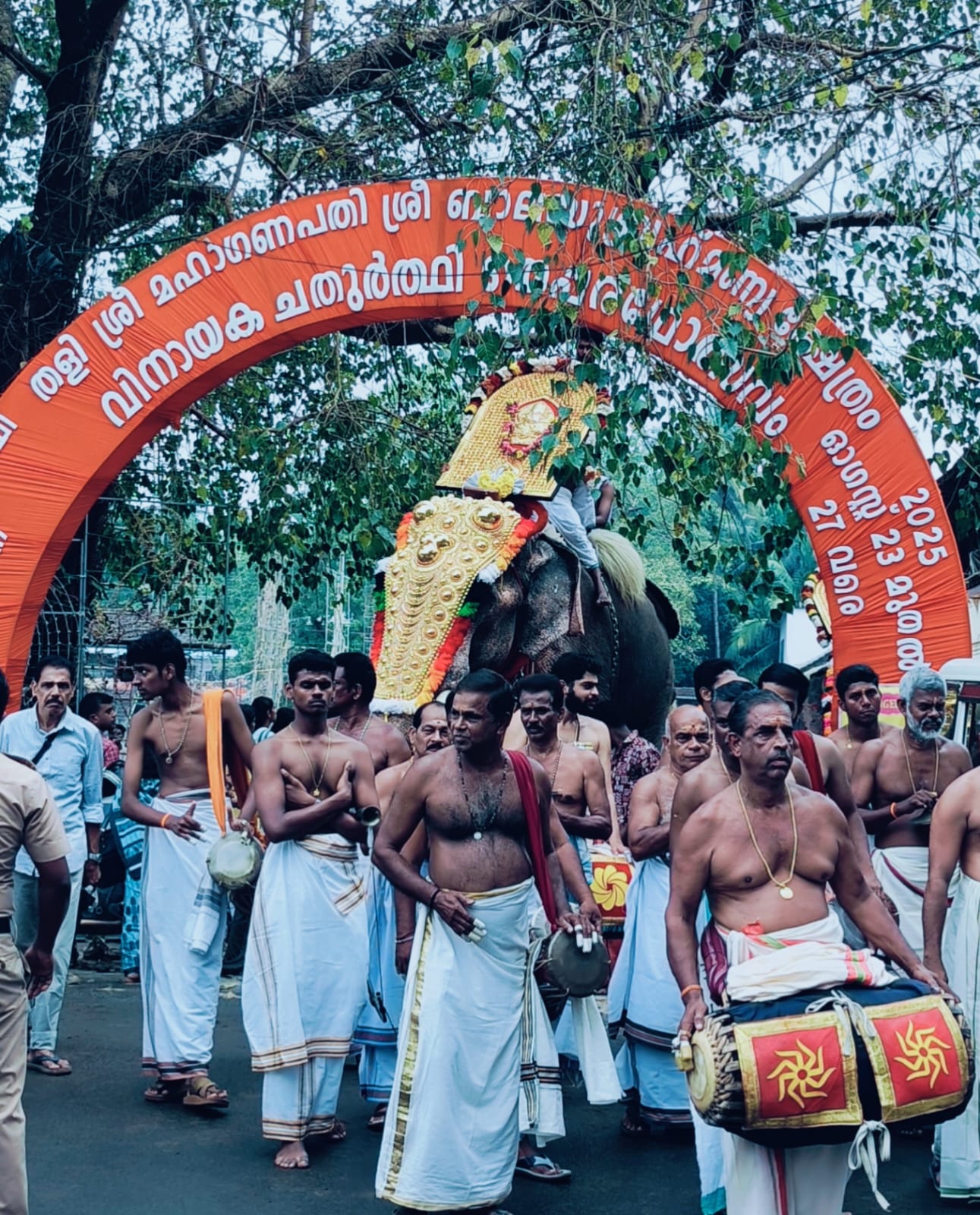
Vinayaka Chathurthi, Pankuni Uthram Maholsavam, Prathistadina Maholsavam, Ayilya Maholsavam, Navarathri Maholsavam, Mandala Maholsavam and more...
Phone: 9446503460, 0495 2704460
Email: taliganapathi@gmail.com
Click the Links for Refund Policy , Terms and Conditions and Privacy Policy